Gold has long served as a trusted store of value, yet owning bars or coins is neither the only nor always the most efficient path to harness its protective qualities. Exchange-traded funds, streaming companies, sovereign-minted bullion programs, mining royalties, digital tokens backed by vaulted metal, and even jewelry-backed lending pools now let investors adjust their exposure to price moves, yields, or inflation hedges while controlling storage risk, liquidity, and tax treatment.
The 12 vehicles examined below range from low-cost trackers that trade like shares to niche instruments that generate cash flow or provide leverage to research success. Each entry outlines how the alternative functions, what drives its returns, where it sits on the risk spectrum, and the practical steps needed to add it to a balanced portfolio. The 12 solid gold investment alternatives are listed below.
Expert behind this article

Thomas Goldfreburg
Thomas Goldfreburg is a gold investment advisor, author and founder of Goldfreed. Thomas's expertise is built on an academic foundation of a Bachelor of Science in Economics from Stanford University and complemented by market experience. Thomas specializes in gold IRA, ETF, 401k, and physical gold investments.
1. Gold ETFs
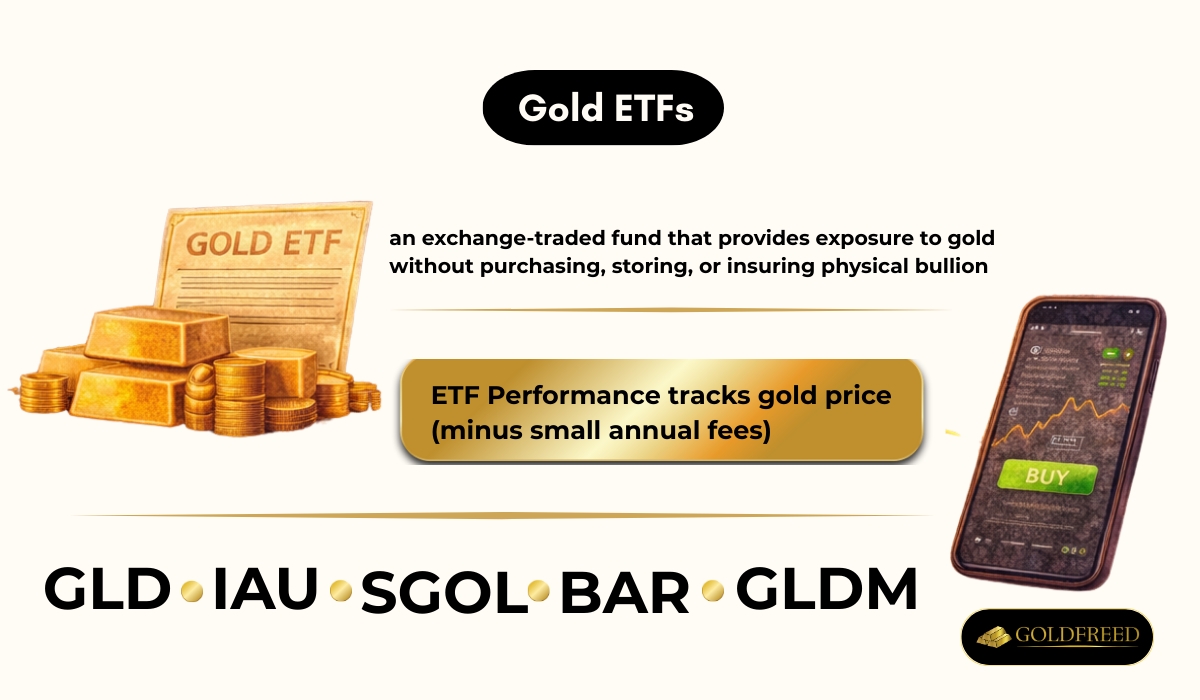
A Gold ETF is an exchange-traded fund that provides exposure to gold without asking the investor to directly purchase, store, insure or resell physical bullion. Each share represents fractional ownership of the gold held by the fund, so when the spot price rises or falls the ETF performs in line with that move, minus a small annual expense ratio. The largest and oldest products can be identified by ticker symbols: GLD, IAU, SGOL, BAR and GLDM, or by issuer names including State Street, iShares, Abrdn, GraniteShares and Goldman Sachs, all trade on stock exchanges exactly like ordinary equities and can be bought and sold in real time through any low-fee or commission-free brokerage account.
Investors choose the format because it is cheap, liquid and efficient. Physically-backed trusts: iShares Gold Trust IAU, Aberdeen Standard Gold ETF SGOL and Goldman Sachs Physical Gold ETF AAAU keep vaulted metal in London or Zurich, eliminating counter-party risk, while synthetic funds hold futures or forwards, in either case storage and insurance costs disappear for the shareholder. Annual expense ratios range from 0.00% to 0.99%, with the newest micro-shares vehicles (IAUM, GLDM) charging as little as 0.09-0.18%, and median bid-ask spreads are only 0.01-0.03%.
Because the instruments are classified as securities, they can be held inside an ISA, a 401(k), a traditional or Roth IRA, a self-directed SDIRA or even a 529 plan, allowing savers to add gold to retirement or education accounts without tax complications. They also diversify equity-bond portfolios: the metal's low correlation with stocks cushions volatility, and many investors treat the position as a hedge against inflation or geopolitical uncertainty. Whether used for a short tactical trade or a long-term buy-and-hold strategy, Gold ETFs deliver the intrinsic value of gold with the added convenience of craftsmanship-level engineering-trading from the comfort of home at the tap of a mobile app.
My first attempt into precious metal ETFs was driven by a desire to diversify my portfolio without the logistics of tangible ownership. Starting my brokerage account and conducting my initial transaction felt no different from buying a common share, obtaining a stake in gold with an easy click was the opposite of purchasing, insuring, and storing ingots. The liquidity permitted an instant entry; ETF costs are lower than the charges and storage in tangible gold owning, so a larger part of my asset is directly subjected to the metal’s price movements. While I do not hold it physically, the investment firm's structure is backed by allocated gold ingots, providing clear and adequate assurance.
Thomas GoldfreburgInvestor at Goldfreed
2. Gold mutual funds
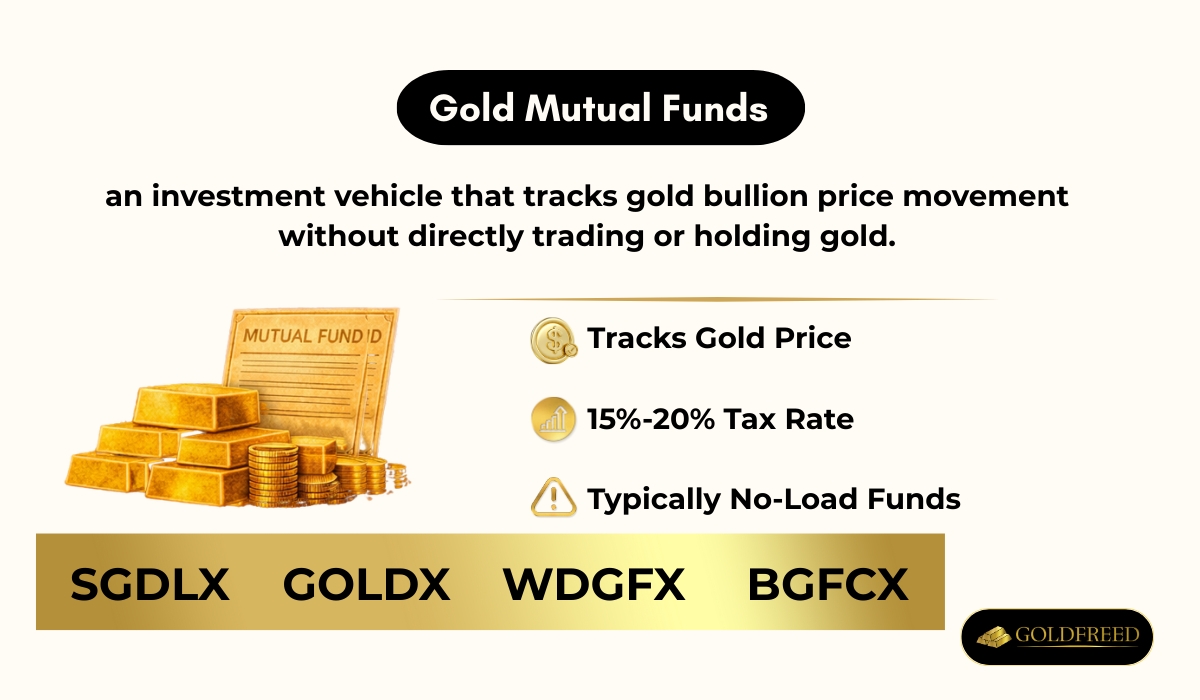
A gold mutual fund is the only type of mutual fund that permits investors to track gold bullion price movement. The vehicle is typically no-load and is not classified as a collectible by tax authorities, so gains are taxed at the lower 15%-20% capital-gains rates instead of the 28% rate applied to physical gold.
The oldest funds in the group, Gold and Precious Metals Fund, was the first no-load gold fund in the U.S., it invests at least 80% of net assets in equity securities of companies involved in mining, fabrication, processing, marketing, or distribution of metals including gold, silver, platinum-group, palladium, and diamonds, and also pursues current income as a secondary objective while aiming to protect against inflation and monetary instability.
Sprott Gold Equity Fund, whose investor-class ticker is SGDLX, seeks long-term capital appreciation by investing at least 80% of net assets in gold and other precious metals and securities of mining companies or processing gold, portfolio manager John Hathaway has 23 years of tenure, and a 2% redemption fee applies during the first 90 days. Other actively-managed examples include the WS Ruffer Gold Fund, which charges a 1.2% annual management charge, and the Jupiter Gold & Silver Fund, which gives dual access to gold and silver through listed securities.
My first attempt into gold mutual funds was driven by a desire to diversify across multiple mining companies, offering more security than relying on a sole stock. I invested a small amount through my brokerage account, and the procedure was straightforward. The investment reduced the functional risk of mining corporations, still offering exposure to some gains. I have noticed that my funds behave differently from my other assets, traveling inversely to the stock market and acting as a counterweight within my portfolio. Although the returns are not impressive as some personal shares, the steadiness and peace of mind it provides serve as a valuable buffer during downswings.
Thomas GoldfreburgInvestor at Goldfreed
3. Digital gold
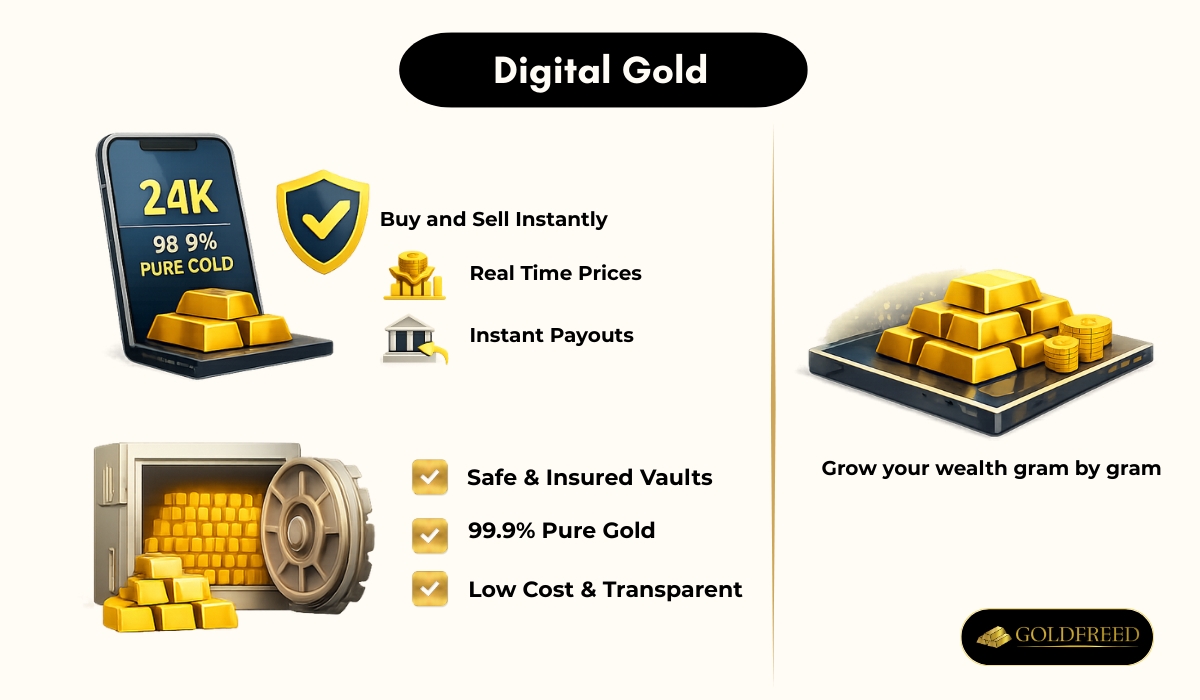
Digital gold offers a modern alternative to physical gold by allowing investors to buy, store, and sell pure 24K gold instantly through online platforms. These services eliminate traditional barriers like high making or wastage charges, concealed markups, and storage hassles, while guaranteeing 99.9% purity alongside consistent nationwide pricing. Transactions can be made in very small amounts, feature real-time gold rates, and guarantee immediate settlement of proceeds directly to a bank account.
Regulatory safeguards add reliability. Trusted custodians hold the underlying metal in insured vaults, and investors pay no extra fee for storage or security, removing both impurity risk and the need for safes at home. A modest premium plus 3% GST applies, and the overall cost structure remains transparent and competitive, making digital gold an efficient path to accumulate gold gradually over time without logistical worries.
Digital gold offered transparency and control that physical precious metal could not provide. I had associated gold with tangible bars kept in a vault, but the concept changed when I began with a little regular purchases through a respected app. My digital wealth accumulated gram by gram without the logistical worries or insurance, and each transaction was completed within seconds, with funds sent straight to my bank account. My initial doubts gave way to confidence as I built an organized approach in this modern financial medium.
Thomas GoldfreburgInvestor at Goldfreed
4. Gold jewelry and coins
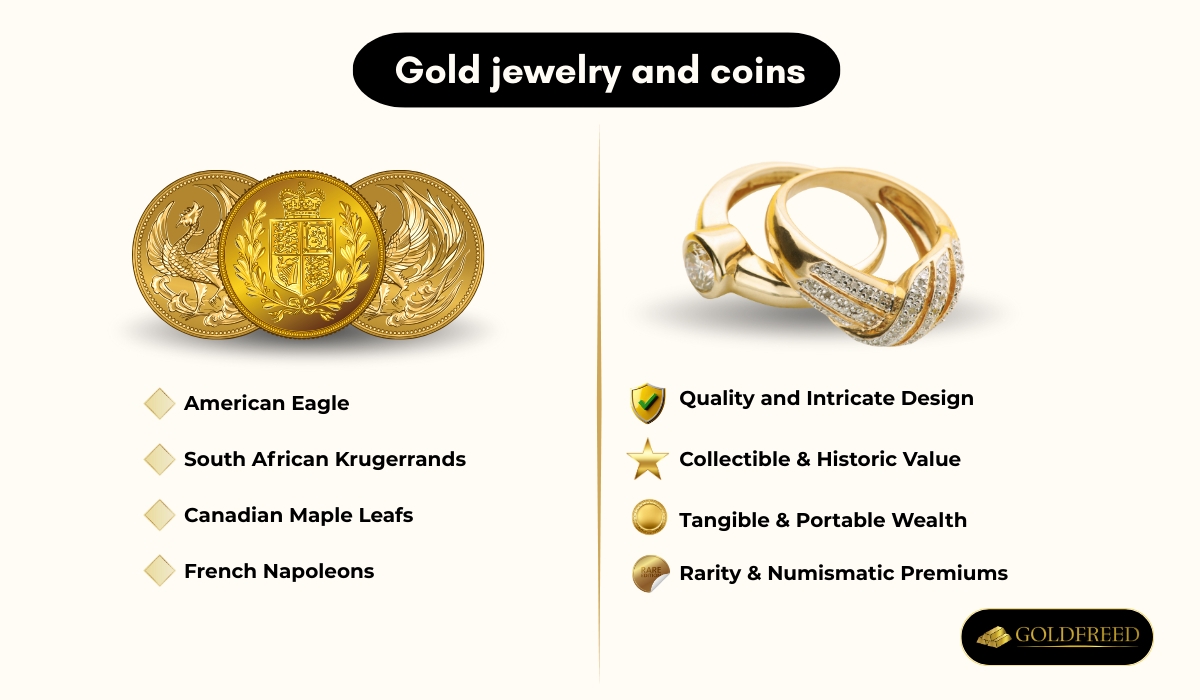
Gold jewelry and collectible coins satisfy the desire for direct, tangible ownership. They are not primarily investment vehicles, yet they accrue numismatic premiums over time. Gold coins like the American Gold Eagle, American Buffalo, Canadian Maple Leaf, French Napoleons, British Sovereigns, and South African Krugerrands are popular choices. South African Krugerrands and French Napoleons are examples of gold coins that are legal tender in their country of origin. Gold coins are minted with designs on both sides, adding a layer of security against counterfeiting. Gold coins are a little different from bullion because they are legal tender, they often have a premium linked to rarity, state of preservation or history.
Gold jewelry often comes with making charges and purity concerns. Real gold jewelry still fetched a reduced price due to wear and tear. Gold jewelry accumulates value over time, but appraisal is complicated. Gold jewelry is bought from a gold dealer. Gold jewelry demand contributed to stronger than anticipated demand from the APAC region, APAC region demand was led by Chinese consumer via jewelry and physical bars/coins alongside central bank buying.
Fine gold jewelry serves dual-purpose: a high-karat piece acts as a portable store of value and as individualized jewelry I can wear every day. I enlarged my belongings after starting with a few gold dollars. Having an American Eagle medallion gave me a deep feel of safety, its weight and intricate design connected me to decades of financial history. Beauty and financial value coexist, yet I know that its price is influenced by market sentiment and workmanship. Still, I recognize its inherent worth that keeps protected by the changeless value of the valued gold itself.
Thomas GoldfreburgInvestor at Goldfreed
5. Gold mining stocks
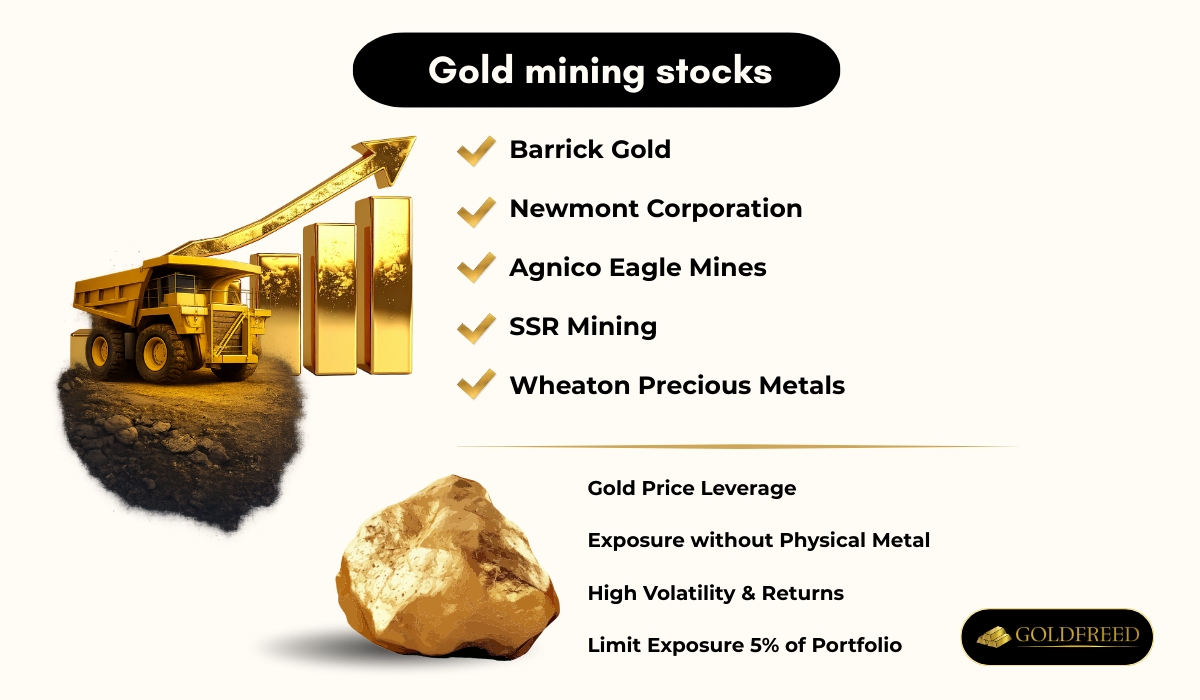
Gold mining stocks are shares of publicly traded companies involved in the mining and production of gold. Such shares provide leveraged exposure to gold prices without the investor needing to hold physical metal, they rise faster than gold in favorable markets yet carry higher volatility. Barrick Gold, Newmont Corporation, Agnico Eagle Mines, SSR Mining and Wheaton Precious Metals are often-cited names available through CFD trading.
The theory that guides buyers is straightforward: when the gold price goes up, profit margins go up as well, but the leverage also exposes holders to company-specific hazards like rising costs, labor unrest, geopolitical friction, environmental fines and management errors. Analysts therefore suggest capping exposure at roughly 5% of a portfolio and balancing single names with broader trackers, for example, the NYSE Arca Gold Miners Index, GDX or actively managed gold funds.
My first venture into gold mining stocks was driven by a desire to engage with market trends. I carefully researched various mining companies, examining their reserves, manufacturing costs, and management, and allocated a part of my portfolio to a well-established manufacturer with a strong balance sheet. The stock value appeared to link with gold prices, yet I shortly found these investments brought a specific risk beyond the gold itself: from company-specific issues to geological situations. An unexpected problem at one of the goldmines provoked a steep fall in the stock's price despite a steady gold’s cost, and this ordeal highlighted the substantial impact of company-specific factors.
Thomas GoldfreburgInvestor at Goldfreed
6. Physical gold
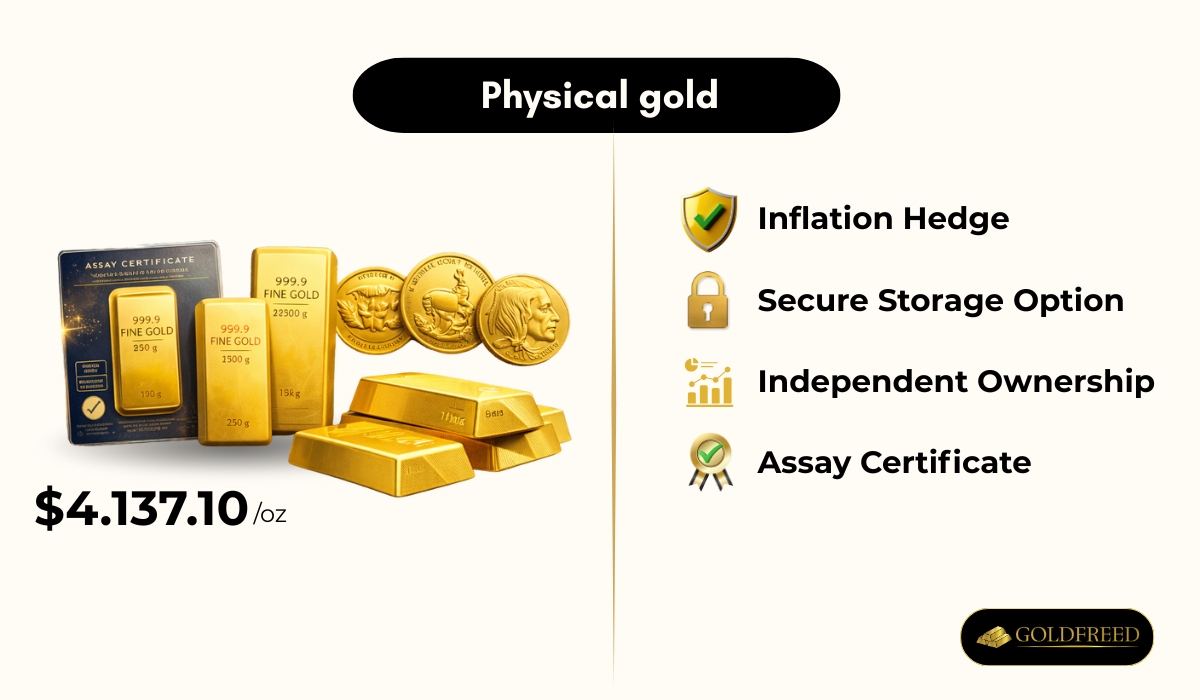
Physical gold is a store of value and an inflation hedge that has long symbolised wealth throughout the ages. It is available to retail investors as 50 g (1.76 oz), 100 g (3.53 oz), 250 g (8.82 oz) or 1 kg (35.27 oz) bars, and to institutions as 1 kg (35.27 oz) ingots or 400-ounce (11.34 kg) London Good Delivery bars, while coin formats: the Canadian Maple Leaf, the South African Krugerrand and the American Buffalo are struck by government and private mints at 0.999 fine purity. Purchases are arranged at bullion dealers, jewellery stores or online shops, typically for a premium above the prevailing $4,137.10 per ounce spot price plus possible sales tax and shipping cost, so every bar or coin is delivered with an assay certificate attesting authenticity of the stated weight and purity.
Investors who wish to keep their own metal can place bars in a home safe, a bank safe-deposit box or any certified depository that combines secure storage, with round-the-clock surveillance, full insurance cover, and the ability to ship or collect, although safe-storage fees, insurance invoices and bid-ask markup reduce net profit and liquidity relative to ETFs.
Active holders therefore compare the expense, risk and effort of taking possession with the convenience of a trust product like Sprott Physical Gold Trust (NYSE: PHYS, TSX CA$ PHYS, TSX US$ PHYS. U). The Sprott vehicle owns 5,735,429.68 oz (162,586,000 kg) of fully allocated bullion, valued at $14.95 billion 2025 market value, holds it in a secure vault Investors in PHYS gain liquidity through regular NYSE Arca and TSZ trades, occasional options on the Montreal Exchange, optional redemption in physical bars above the monthly minimum, and potential tax advantages, while eliminating counterparty risk and storage worries. In short, physical gold offers a tangible alternative that investors can hold directly or access efficiently through a purpose-built trust.
My first attempt started with acquiring a single, one-ounce gold dollar, forming the foundation of my long-term reserves scheme. I also owned small gold bars I kept in a safe vault, which gave me actual ownership that digital resources cannot replicate. The gold coin’s delivered real value, while its weight offered a feel of wealth resistant to currency depreciation. Immediate possession removes dependence on banks and dependence on third-party organizations, giving me peace of mind.
Thomas GoldfreburgInvestor at Goldfreed
7. Sovereign Gold Bonds
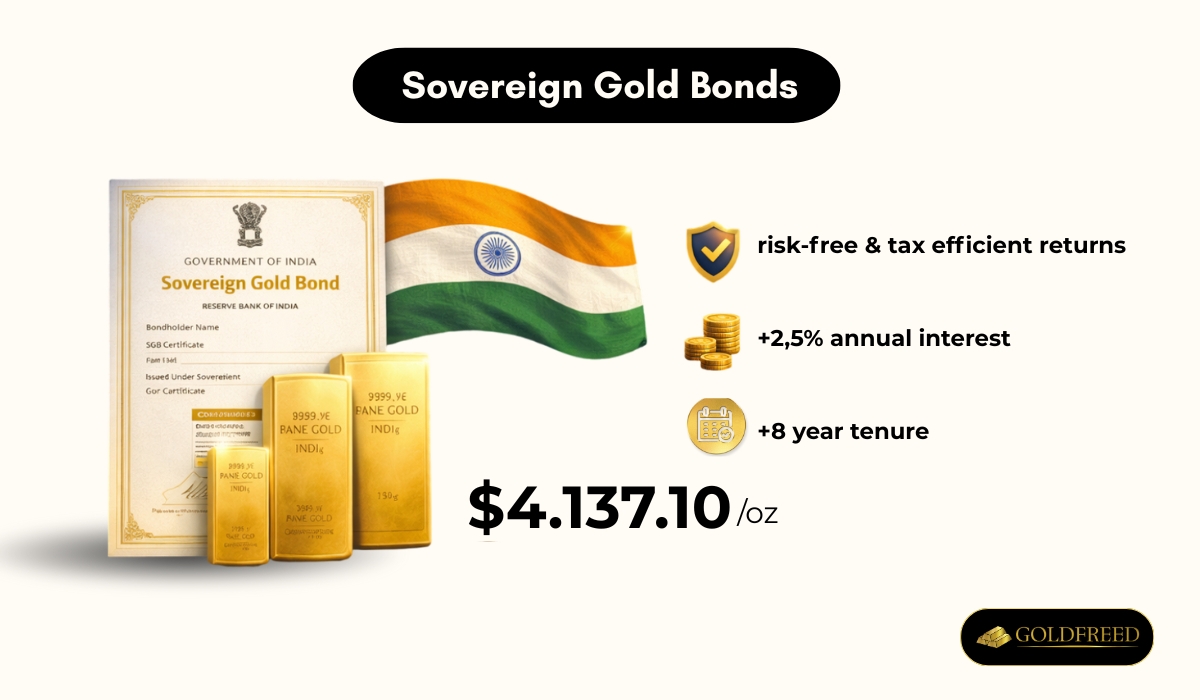
Sovereign Gold Bonds are government securities issued by the Reserve Bank of India on behalf of the Government of India. These bonds are denominated in grams of gold and represent the value of gold, providing a perfect substitute for physical gold. Introduced in 2015 as part of the Gold Monetisation scheme, these bonds aim to reduce gold imports and mobilize idle gold. The issue price of Sovereign Gold Bonds is fixed based on the closing market value of 999-purity gold in the last three business days of the subscription period, while the redemption price at maturity is calculated based on the average closing price of gold of 999 purity for the last three business days.
Sovereign Gold Bonds have a tenure of eight years, with a lock-in period of five years, after which they are redeemed on interest payment dates. The bonds pay a fixed interest rate of 2.5% per annum, calculated on the original issue price, and interest is payable semi-annually. The minimum investment in SGBs is one gram (0.035 ounces), with maximum limits of 4 kg (8.82 pounds) per year for individuals and 20 kg (44.09 pounds) per year for trusts. The Indian Government guarantees Sovereign Gold Bonds, making them a safe investment backed by the sovereign. The underlying gold reserve is kept in the safe custody of the Government of India, assuring zero storage costs, unlike physical gold.
One of the most attractive features of Sovereign Gold Bonds is that capital gains on redemption are tax-free for individual investors if held till maturity. Existing SGB holders will receive the promised redemption and tax treatment even though the government has now discontinued the scheme. The bonds were restricted to resident Indians due to FEMA regulations, and while they can be traded on stock exchanges like NSE and BSE, the secondary market has liquidity issues.
Premature redemption is allowed after five years on interest payment dates, and certain SGB series have delivered strong returns, the 2020-21 Series VIII, which gave a 144% return on premature redemption. Alternatives to Sovereign Gold Bonds include Gold BeES and Gold Mining Stocks. Held in dematerialized or physical certificate form, SGBs are used as collateral for loans.
Investors looking for low-risk gold exposure, tax-free maturity benefits, and an additional income stream have long favored SGBs. However, with the Budget 2025 announcement confirming the discontinuation of the scheme, investors are examining new avenues for gold investment. Existing Sovereign Gold Bonds will continue until maturity, but no new issuances are planned.
Sovereign Gold Bonds offer a safe venture in gold backed by the Government. They felt like a modern and smart evolution of the conventional gold assets, removing the need for physical storage, while providing stable annual returns. I was attracted to the multiple advantages: straightforward, easy and safe operations. Carrying these bonds conveys long-term security, making my journey a deliberate seeking for secure, hassle-free gold exposure.
Thomas GoldfreburgInvestor at Goldfreed
8. Gold futures
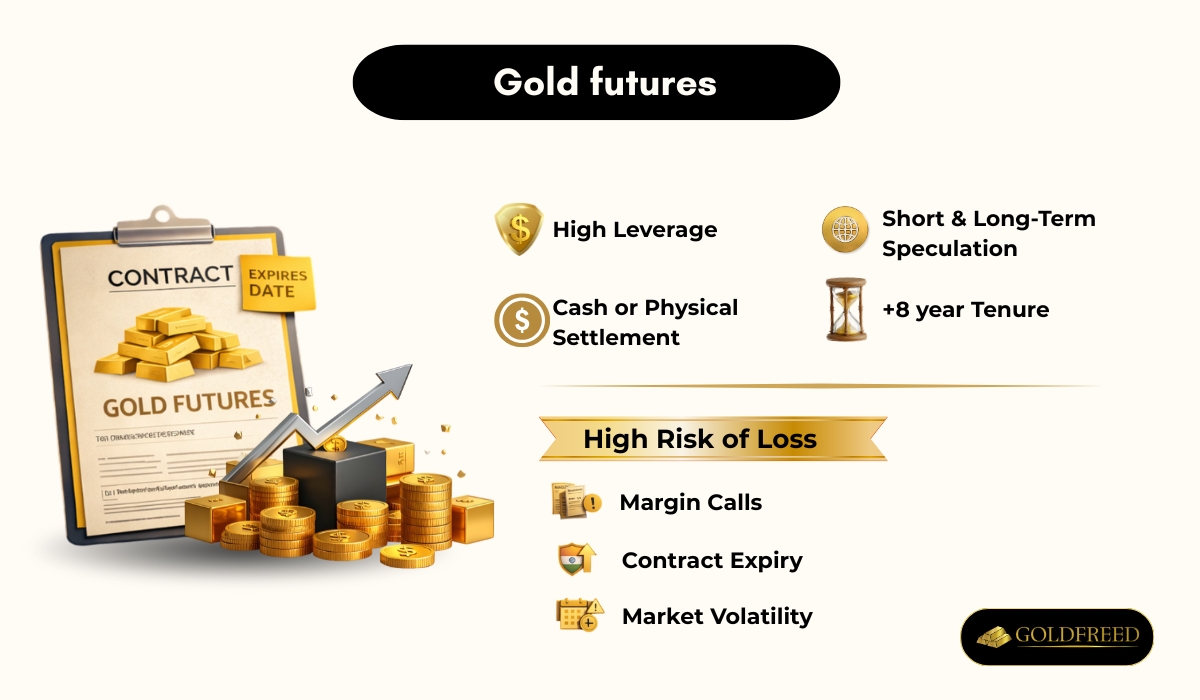
Gold futures are legally binding contracts that lock in a predetermined price and date for the exchange and delivery of a specific amount of gold. They allow you to speculate on the price of gold rising or falling without taking physical possession, and they provide exposure to gold with higher leverage than buying physical gold or gold funds. Buyer and seller enter into a legal contract to exchange and deliver a specific amount of gold at a predetermined price and date.
Because one contract controls many ounces, gold futures allow you to own a lot of gold for a relatively small amount of money, yet the same leverage cuts both ways: large gains appear quickly if the price moves in the direction thought, but equally large losses are generated if the price moves against the direction thought. Futures contracts have an expiration date, require margin, and are settled for cash or physical delivery, most speculators never take delivery and simply roll the position forward or close it before expiry.
Gold futures are a risky investment for beginners because they rely on speculation, respond sharply to market volatility, and produce losses greater than the initial investment. Experienced investors also use them as a hedge when stocks become volatile or to lock in a gold price for a future date, but active management is crucial since all futures have an expiration date and contracts generate margin calls if price moves against the position.
My first attempt into gold futures was motivated by desire to enhance my market analysis skills. I learnt prices to be able to foresee substantial value motions. I entered my initial request and watched over value checks and update feeds. Connection between the U.S. dollar, geopolitical conflicts, and the cost of gold seemed to be an advantage. But my position moved against me, paper losses mounted quickly, and margin calls arrived. My experience was challenging, teaching me risk management and how to watch market volatility with a cooler head.
Thomas GoldfreburgInvestor at Goldfreed
9. Gold savings accounts
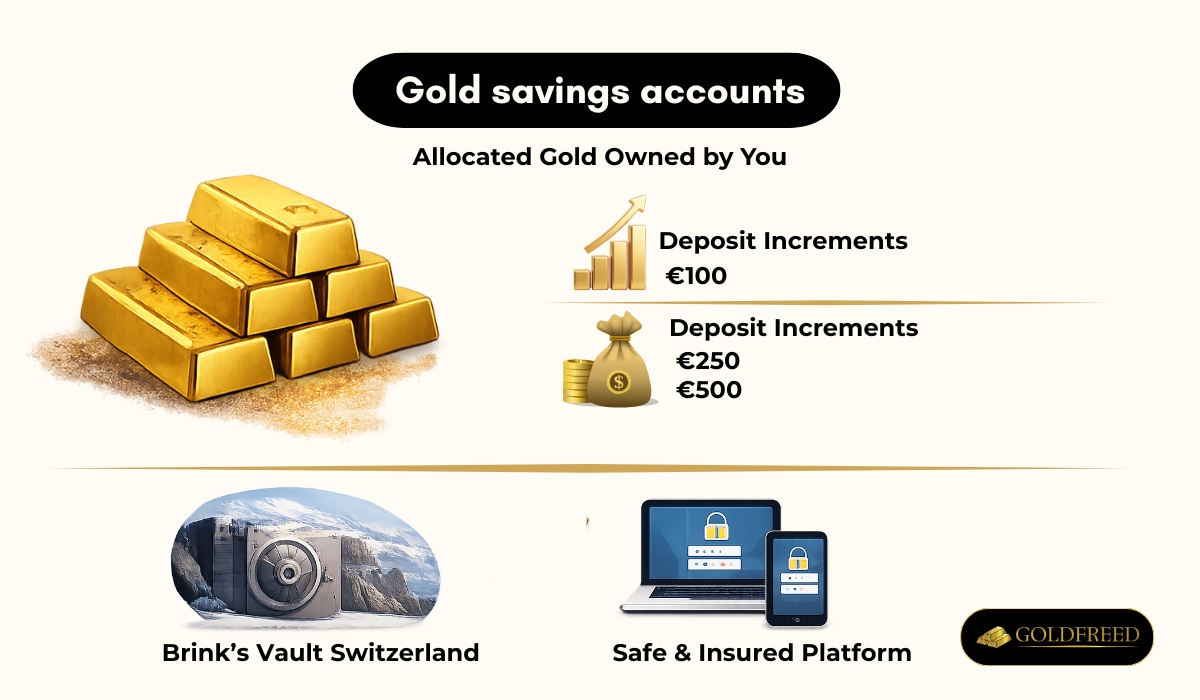
A gold savings account is a digital service that allows you to buy small fractions of gold and store them securely in high-security specialised gold vaults. The best-known example in Ireland is the GoldSaver account provided by GoldCore: the minimum monthly deposit is 100, incremental options are 250 and 500, and there is no maximum. Gold is purchased on the 6th or 8th day of each month at the London Bullion Market Association AM US dollar gold fixing price from LBMA-approved refineries and mints, then credited to your account as allocated gold owned by you. The metal is held in Brink's Vault in Switzerland, insured by Lloyds of London, and the entire plan is managed through a secure password-protected online platform; additional deposits are made at any time.
10. SPDR Gold Shares
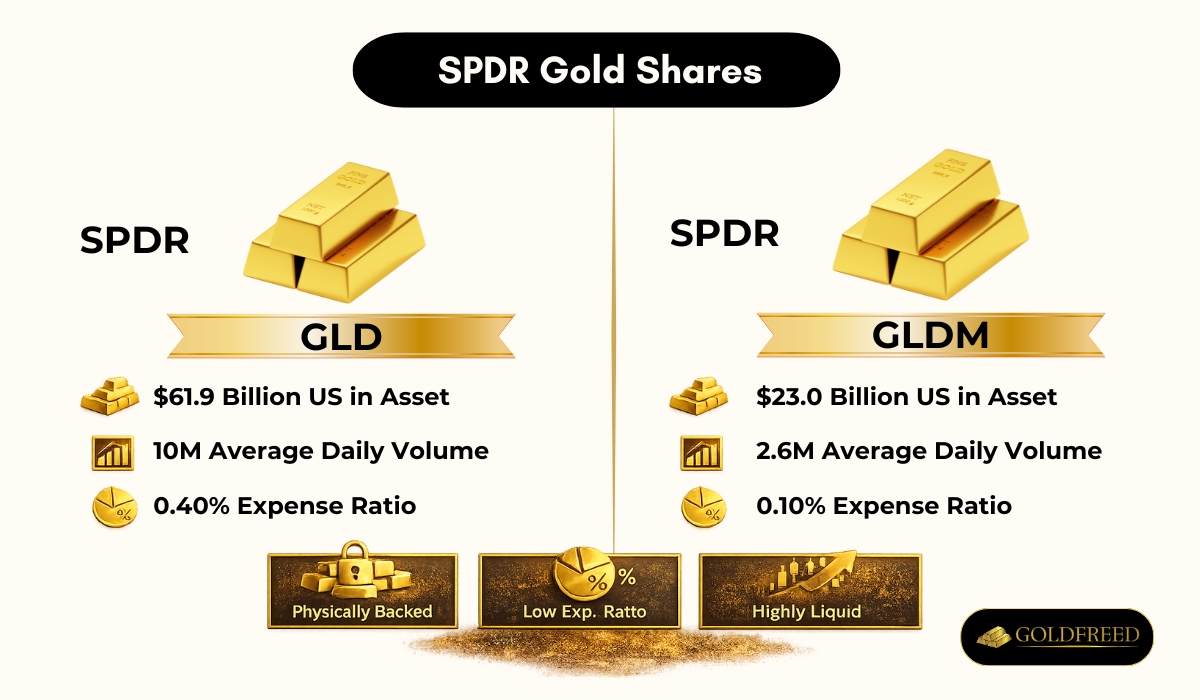
SPDR Gold Shares (GLD) is the first U.S.-listed fund to offer physically backed exposure to the metal. GLD trades on NYSE Arca and tracks the LBMA Gold Price as a benchmark. The trust holds $69.1 billion in assets and uses a grantor trust structure, so each share represents a fractional interest in vaulted gold bullion. State Street Investment Management is the issuer, while HSBC Holdings serves as custodian, sub-custodians also hold gold on behalf of the trust. GLD offers the best liquidity in the gold ETF space: its 3-month average daily volume is 10,029,630 shares and its 30-day median bid-ask spread is 0.01%. A robust options market enhances trading flexibility. The expense ratio is 0.40%, which reduces net return, and the fund's one-year performance is 44.70%.
GLD's lower-cost companion, SPDR Gold MiniShares Trust (GLDM), was launched by State Street in June 2018 and trades on NYSE Arca under ticker GLDM. GLDM is also a physically backed gold ETF, it charges 0.10% annually and has an expense ratio of 0.10%. Assets under management stand at $23.01 billion, daily volume averages 2,639,706 shares, and the 30-day median bid-ask spread is 0.02%. GLDM's one-year performance is 53.90%, making it an efficient, liquid alternative for cost-conscious investors seeking small-lot gold exposure.
11. VanEck
VanEck is an investment firm founded by John van Eck (1915-2014) and today led by his son Jan van Eck, who took over the reins in 1992; Derek van Eck joined in 1993. The company issues physically-backed and equity gold ETFs that employ aspects of smart-beta investing and cover country, industry, guided-allocation and hard-asset categories.
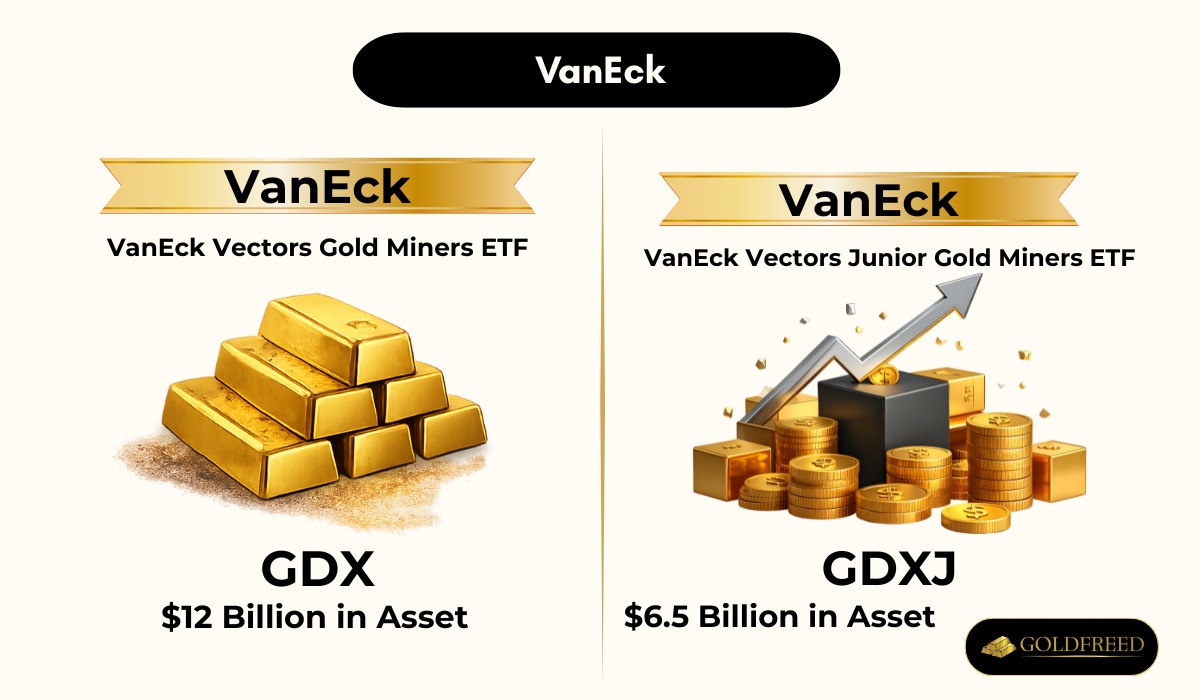
VanEck Vectors Gold Miners ETF, ticker GDX listed on NYSEMKT, launched 16 May 2006, is the largest gold-miners ETF, with total net assets of nearly $12 billion and a total expense ratio of 0.51%. The fund seeks to replicate as closely as possible the price and yield performance of the NYSE Arca Gold Miners Index, its top ten holdings, led by 7.9% Agnico Eagle Mines, comprise almost 53% of its assets. GDX returned +3.50% in 2023 and saw inflow surge 41%.
VanEck Vectors Junior Gold Miners ETF, ticker GDXJ listed on NYSEMKT, focuses on about 80 junior gold stocks whose average market capitalization is below $4 billion. With total net assets of $6.5 billion and an expense ratio of 0.51%, GDXJ also returned +3.50% last year and recorded a 39% inflow surge.
VanEck Gold Miners UCITS ETF, ticker GDGB on LON, is the European passive share class that tracks the same NYSE Arca Gold Miners Index. Its total expense ratio is 0.53%.
VanEck Merk Gold Trust, ticker OUNZ, is the first U.S. ETF that offers investors the option to take physical delivery of gold. Assets increased 80% to $402 million at an expense ratio of 0.52%.
Across its suite, VanEck applies expense ratios of 0.51%, 0.51% and 0.39% respectively as of August 2025, all well below the 1.5% threshold regarded as excessive, and manages roughly $62 billion globally.
12. Silver
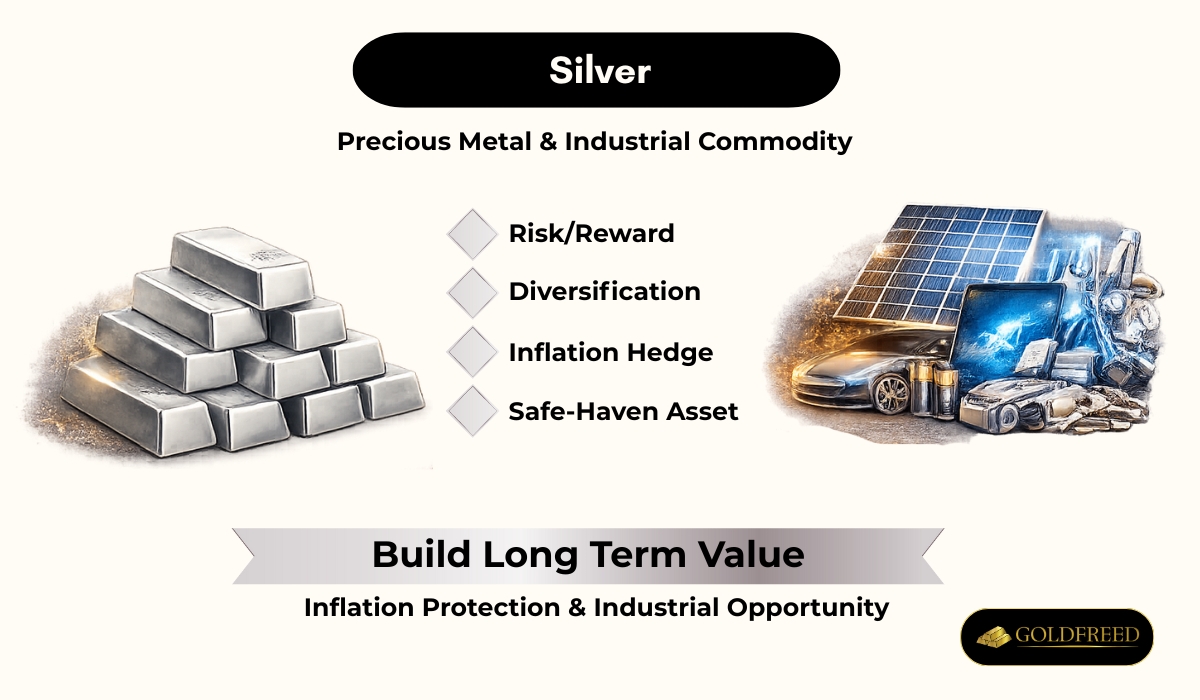
Silver is a dual-purpose metal that functions simultaneously as a precious investment asset and an important industrial commodity. Silver is fundamental in semiconductors, touchscreens, batteries, and power rods in nuclear reactors, while it is also used to manufacture electronics, automotive components, medical devices, and solar panels. Because roughly half of demand comes from factories, its price fluctuates more due to industrial demand, making the price of silver more volatile than the price of gold. Historically, silver has been almost exactly twice as volatile as gold based on standard deviation.
For investors, silver is a great option for investors seeking a high-risk, high-return strategy, a low-correlation asset, a hedge against inflation, and a safe-haven in times of economic uncertainty. Silver has a low correlation with stocks and bonds, so it offers diversification and inflation protection within a well-structured portfolio, and its lower entry cost than gold makes it easier to buy when capital is limited. Eric Croak explained that silver provides inflation protection and industrial exposure, a combination that supports long-term value even when financial markets are unsettled.
Looking forward, Yoshida and other analysts expect gold and silver to play a strategic function in an investor's portfolio before 2026. Silver prices have more than doubled since early 2023 and have surpassed numerous price records in 2025, yet the gold-to-silver price ratio is still around 82:1, leaving silver cheaper relative to gold than it has been in a long time. Middle-class population growth continues to drive greater industrial demand, while supply constraints and geopolitical risk add further upside pressure. Whether one buys physical bars from reputable dealers, acquires coins from banks, or employs (carefully, because derivatives are intricate and require expertise) exchange-traded notes secured by debt obligations, silver delivers both inflation protection and leveraged exposure to technological and renewable-energy megatrends.
I started humbly, buying American Silver Eagle coins from a trusted seller. I valued silver's inherent worth, enjoying the physical ownership and safety it offered. I understand that silver's cost is frequently more volatile than gold's, yet it presents opportunities for a patient investor. Furthermore, I had used to observe the gold-to-silver ratio as a possible signal for purchase time.
Thomas GoldfreburgInvestor at Goldfreed