
24K gold purity suits most for investment. Pure gold retains its value like no other type; it is recognised globally and is easy to trade. You can invest in 24K gold in bullion, in shares, or in digital products that are backed by 24 karat physical gold.
Jewellery-grade alloys are a different story: 24K gold will never be the right choice for making gold jewellery, and 24K gold is rarely used in jewelry. Instead, 22K gold is used in traditional and ceremonial jewelry, especially in Indian, Middle Eastern, and Asian markets, while 18K gold is preferred for luxury jewelry and wedding bands. Because such alloys sacrifice purity for strength, 18-karat gold is not the best choice for investment, and 10K gold isn't preferred for long-term appreciation either.
Expert behind this article

Thomas Goldfreburg
Thomas Goldfreburg is a gold investment advisor, author and founder of Goldfreed. Thomas's expertise is built on an academic foundation of a Bachelor of Science in Economics from Stanford University and complemented by market experience. Thomas specializes in gold IRA, ETF, 401k, and physical gold investments.
What is the best karat gold for investment?
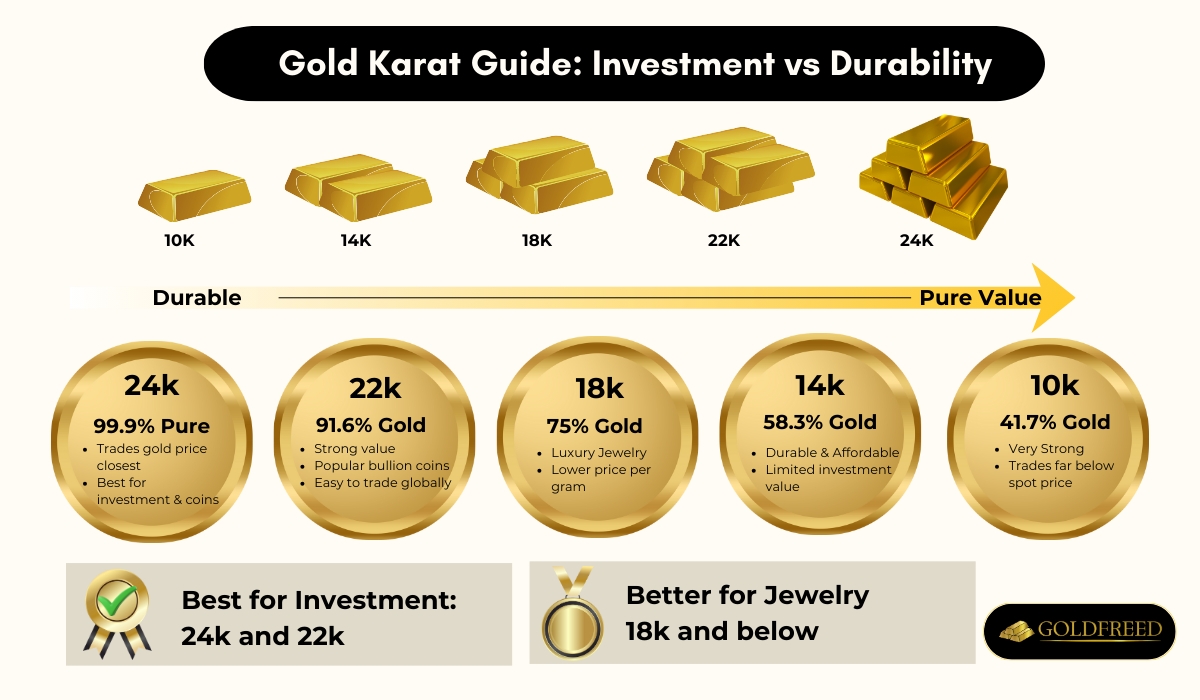
24k gold is the purest form of gold available, and this purity makes it appropriate for investment purposes. It is highly valued for its brilliant yellow colour and malleability, and 24K gold is recognised globally. This makes 24K gold bullion easy to trade.
24-karat gold is 99.9% gold, so it tracks the world gold price most closely and is the first choice for bullion coins and bars. 22-karat gold contains 91.6% gold and is used for popular bullion coins, it keeps almost the same resale value while resisting scratches better than 24-karat. 18-karat gold contains 75% gold and is used for luxury jewellery, its higher alloy content makes it harder than 22-karat, but the price per gram is already lower than 24-karat. 14-karat gold is 58.3% gold, strong, durable and affordable, yet the lower gold content means its investment return is mainly in wearability, not metal value. 10-karat gold has only 41.7% gold, it is the hardest karat to dent and shines longer than any other karat, but more than half the weight is base metal, so it trades far below spot gold. Lower karat means more durability but less gold, so for pure investment, 24-karat and 22-karat gold hold the greatest store of value, while 18-karat and below are better suited for jewellery that must also survive daily wear.
22-karat gold offers excellent balance between value and durability, making it superior for investment. Its alloyed composition produces a stable, fungible asset that is simpler to trade. Pure 24K gold, while being the purest, is soft and therefore less practical. Customers showed preference for 22-karat pieces, confirming my choice.
Thomas GoldfreburgInvestor at Goldfreed
Is 22k vs 24k gold better for investment?
24K gold (bars/coins) is a better choice due to its purity and resale value, making it ideal for pure investment purposes; whereas 22K gold is suitable for both investment and practical use. However, 24K gold offers unmatched purity and liquidity.
The comparison between 22k vs 24k gold for investment is explained in the table below.
| Aspect | Comparison |
|---|---|
| Purity | 24K gold is 100% pure; 22K gold is 91.67% pure |
| Durability | 22K gold is more durable than 24K gold |
| Price | 24K gold is more expensive than 22K gold |
| Solidity | 24K gold is less solid and more delicate than 22K gold |
| Tarnish/Corrosion | 24K gold is less likely to tarnish or corrode |
| Softness | 24K gold is softer, prone to scratches and bending |
| Color | 22K gold has a slightly less intense yellow color |
| Other Metals | 22K gold contains 8.33% other metals (copper, silver, zinc) |
| Jewelry Utility | 22K gold is more practical for jewelry like rings |
| Everyday Wear | 22K gold is better for daily wear |
| Investment Value | 22K gold value rises when fiat currency purchasing power declines |
| Making Charges | 22K gold jewelry involves making charges not fully recoverable during resale |
| Market Preferences | Choice between 22K and 24K depends on personal needs |
| Regional Use | 22K gold is prevalent in India and the Middle East |
| Hypoallergenic Properties | 24K gold is hypoallergenic and great for sensitive skin |
| Electronics Use | 24K gold is used in electronics |
| Numismatic Value | 22K gold provides durability and numismatic value |
| Store of Wealth | 22K gold bullion can be used as a store of wealth |
| Second Highest Price | 22K gold has the second highest price point by weight |
| Traditional Jewelry | 22K gold is preferred for traditional jewelry |
24K gold is likely the superior option when the sole objective is to park wealth in the least diluted form of the metal, it contains no alloy, is less likely to tarnish or corrode, and its price tracks the spot gold quote tick-for-tick. 24K gold is more expensive than 22K gold, yet that very purity means each gram bought today represents the maximum gold weight that will be resold tomorrow, making it the closest thing to a direct commodity play. 24K gold is softer than 22K gold, so bars, ingots, and electronic-grade strips are kept in vaults or circuits where wear is not an issue, investors accept this softness because the metal will never leave protective storage.
22K gold follows 24K gold in the purity hierarchy-91.67 % gold with the remaining 8.33 % made up of other metals: copper, silver, or zinc, so it is less pure and therefore quoted at a lower price per gram. 22K gold is more durable than 24K gold, resists scratches and bending, and is preferred for traditional jewelry in India and the Middle East, yet those same advantages create drawbacks for bullion buyers: jewellery often involves making charges which are not fully recoverable during resale, and the alloy content slightly obscures the underlying gold value. 22K gold serves different investment purposes, it functions as a store of wealth, but buyers must factor in craftsmanship premiums and regional demand rather than treating it as a simple commodity.
The choice between 22K and 24K gold depends on personal needs and market preferences. If the goal is to own the purest, most liquid, and most internationally recognised form of gold, 24K gold is the better investment. If the buyer values lower entry cost, physical durability, or potential numismatic premiums from cultural designs, 22K gold offers an alternative, provided the extra costs and lower purity are understood.